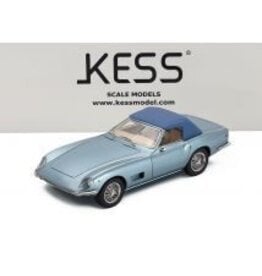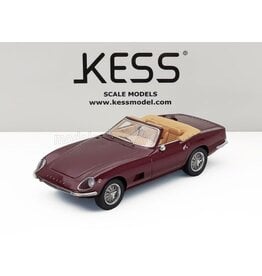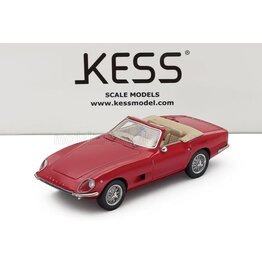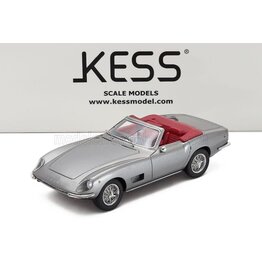
INTERMECCANICA
Initially, the company made tuning kits. The first car was a Formula Junior single-seater using a Peugeot engine, in 1960, which was followed by 21 aluminium-bodied Intermeccanica-Puch (IMP) 500 cc-engined cars, of which one won at the Nürburgring.
Larger American V8 engines were used in the Apollo GT, of which 88 cars were made for International Motor Cars, from 1961 to 1965. The Veltro prototype, however, had a small Ford Anglia-sourced engine. These cars and some other prototypes were designed by Franco Scaglione. The Italia was a larger GT sports car, of which approximately 500 were made, from 1966 to 1972, followed by eleven Murena GT models in 1971. The same year, with Erich Bitter and Opel, Intermeccanica developed the Indra, followed by a few years of assembling the Squire car.
The company relocated to Santa Ana, California, in 1975 and started to build replica cars, such as the Porsche 356 Speedster in 1976 and Checker Taxi in 1979. It is now known as Intermeccanica International Inc., and has been based in Vancouver since 1982.
Intermeccanica today manufactures the Roadster, a replica of the 1959 Porsche 356 convertible, as well as offering a replica of the 1940 World War 2 Volkswagen Kubelwagen "Type 82". Other products include a 1958 Speedster and "turbo look" versions of both the Roadster and Speedster.
Intermeccanica history, 1959 to date

Intermeccanica was founded in Turin, Italy, in 1959. Its first project was speed equipment kits for Renault, Simca, Peugeot, and DKW. Kits consisted of dual throat carburetors, intake manifolds, high-performance cams and oil filters.
A full line of free-flow exhaust systems was developed for 50 or more European cars in cooperation with an Italian tube company. These were marketed under the Intermeccanica label everywhere but North America, and sold particularly well in South Africa. In North America, they were distributed by Stebro, who eventually made the systems themselves.
In 1960, from modifications of Peugeot engines a Formula Junior de-stroked, a counterweighted engine was developed, using the facilities of Conrero. A Formula Junior racing car, one of the first with a rear engine, was also built and sold. When the English Formula Juniors with Ford-based engines in the rear came out a few months later, the IM was outclassed. However, about ten engines were sold.
A small aluminium two-seater coupe was developed by Intermeccanica, based on the Austrian Puch 500. The Puch was a hybrid, with part Fiat 500 chassis and body and part Puch mechanicals, namely a 500 cc air-cooled opposed twin engine, special brakes, and transmission. After a presentation of the prototype car to Steyr-Daimler-Puch AG in Graz, Austria, 21 of these small coupés were built. Some were touring cars, and some lightened for racing. The IMP won the 500 cc class one year at Nurburgring.
During 1961–1963, the Apollo GT body was developed by Intermeccanica for International Motor Cars, a company based in Oakland, California. There was one aluminium prototype completed by Intermeccanica. The company then supplied body/chassis units in steel to International Motor Cars; final assembly was done by IMC, using the new Buick aluminium V8 engine and all Buick running gear. The cars were upholstered in leather and used Borrani wire wheels. Altogether 77 coupés (including the original alloy prototype and a 2+2 prototype) and 11 convertible Apollos were built between 1961 and 1965. In 1963 Intermeccanica exhibited the Apollo coupe at the Turin Automobile Show.
In 1965 the prototype Apollo 2 + 2 was built and exhibited at the New York Automobile Show. It was judged best of the show. Also, a Mustang station wagon prototype was built for some J. Walter Thompson advertising agency partners. The car was presented as an idea car to Ford Motor Company.

A prototype English Ford 106E based car was built, called the Veltro.
In 1966, a new project was started with Jack Griffith of Long Island, New York, for a larger production all steel car with more financing. Griffith had previously been responsible for a similar transatlantic venture, the TVR Griffith 200. Ex-BRM chassis designer John Crosthwaite, working as a consultant for Griffith (and later for Reisner on the Italia), designed the chassis for the Robert Cumberford shaped car called the Griffith GT. The Cumberford designs were finished and refined by Franco Scaglione and a Griffith was shown with a Plymouth 4.5 L V8 engine at the 1966 New York Motor Show.
Tooling was built and production started. Around fourteen cars were shipped when Griffith's company closed. A new customer, Steve Wilder, decided to take over the project, called the cars Omega and had them assembled by Holman and Moody in North Carolina. A total of 33 of these were delivered to the US.
It became obvious at this stage that the only way to pursue the construction of cars was if the cars left Italy fully assembled and running. In cooperation with an Italian bank, Credito Italiano, Intermeccanica found a distributor in Genser Forman of New Jersey, and finally, production and sales reached the 100 to 120 cars per year level. These cars were Ford V8 powered, with Ford running gear.

The distribution was occasionally changed, but up until 1970 about 500 cars were built, first called Torino and later Italia (Ford already had the name Torino registered). The Italia was eventually produced as both a coupe and a very successful convertible.
A Corvair-based all steel prototype called the Phoenix was built for racing driver John Fitch.
During 1965-66 it is believed just two stretched Ford Mustang sports wagons in Highland Green and Signal Red with Ford 429 Hi-Performance engines were built to showcase to FORD what a family wagon could look like as a production vehicle, These luxury packages (four leather seats, bars with cut glass, deep pile carpets and aircraft switches) were constructed again as running cars for an importer in New York. Although FORD declined to take these prototypes onto production the originals exist to this day as fully restored and running show cars looking exactly as they would have back in their day, At the 1969 April New York Automobile Show Intermeccanica had cars on three different stands. For the 1969 Turin Automobile Show, a modified Italia, which conformed to Italian requirements, and added a few features such as a rear movable airfoil, was built. It was called the Italia IMX but remained a prototype.
- AB VOLVO
- AC CARS
- ACADIAN
- ACURA
- ADLER
- AEC
- ALFA ROMEO
- ALFA ROMEO BY ABARTH
- ALFA ROMEO BY BERTONE
- ALFA ROMEO by BOANO
- ALFA ROMEO BY CARROZZERIA TOURING
- ALFA ROMEO BY CASTAGNA
- ALFA ROMEO BY COLLI CAROZZERIA
- ALFA ROMEO BY GHIA
- ALFA ROMEO By ITALDESIGN
- ALFA ROMEO by OSI
- ALFA ROMEO by PININFARINA
- ALFA ROMEO BY TOURING
- ALFA ROMEO by VIGNALE
- ALFA ROMEO BY ZAGATO
- ALLARD MOTOR COMPANY LIMITED
- ALPINE(SOCIETE DESAUTOMOBILES ALPINE SAS)
- ALVIS
- ALVIS BY VANDEN PLAS
- AMC(American Motor Company)
- AMILCAR
- AMILCAR by LA PHOCEENNE
- APRILIA
- Argo Racing Cars Ltd.
- ARMSTRONG WITHWORTH AIRPLANE COMPANY
- ART & TECH STUDIO
- ASA (Autocostruzioni Società per Azioni)
- ASTON MARTIN
- ASTON MARTIN by BERTONE
- ASTON MARTIN by BONIOLO
- ASTON MARTIN BY GRABER
- ASTON MARTIN by ITALDESIGN
- ASTON MARTIN by OGLE
- ASTON MARTIN BY VIGNALE
- ASTON MARTIN by ZAGATO
- ASTON MARTIN LAGONDA BY VIGNALE
- ASTON MARTIN LAGONDA LIMITED
- ATELIER DE CONSTRUCTION ROANNE
- ATKINSON VEHICLES LIMITED
- AUBURN AUTOMOBILE COMPANY
- AUBURN BY BEUHRIG
- AUDI
- AUDI BY DARWINPRO
- AUDI by PININFARINA
- AUSTIN MOTOR COMPANY Ltd.
- AUSTRO-DAIMLER
- AUSTRO-DAIMLER by KEIBL
- AUTOBIANCHI
- AUTOBIANCHI BY BERTONE
- AUTOBIANCHI BY PININFARINA
- AUTOBIANCHI BY ZAGATO
- AUTOMOBILI LAMBORGHINI S.p.A.
- AUTOMOBILI LAMBORGHINI SpA by CHRYSLER
- AUTOMOBILI LAMBORGHINI BY LB WORKS
- AUTO UNION
- AVIA MOTORS S.R.O.
- AVRO
- AvtoKuban
- BAE Systems AB
- BAJAJ
- BARKAS(VEB Barkas-Werke)
- BARREIROS DIESEL S.A.
- BAUER CARROSSERIE
- BAW International - Beijing Automobile Works Co., Ltd.
- BEDFORD
- BelAZ
- BELL
- BENELLI
- BENTLEY
- BENTLEY by ABBOTT
- BENTLEY by FRANAY
- BENTLEY by GRABER
- BENTLEY by MULLINER
- BENTLEY BY PININFARINA
- BENTLEY BY WENDLER
- BERLIET
- BERTONE
- BETA MOTORCYCLES
- BMC(The British Motor Corporation LTD)
- BMW
- BMW BY ALPINA
- BMW by Bertone
- BMW by DarwinPRO
- BMW by FRUA
- BMW by ITALDESIGN
- BMW BY LIBERTY WORKS
- BMW by PININFARINA
- BMW by ZAGATO
- BORGWARD
- BRISTOL CARS LIMITED
- BRITISH LEYLAND
- BRM(British Racing Motors)
- BUGATTI
- BUGATTI BY BERTELLI
- BUGATTI by LABOURDETTE
- BUGATTI by VANDENPLAS
- BÜHRER TRAKTORENFABRIK AG.
- BUICK
- BUICK BY LANCEFIELD
- BUICK by PININFARINA
- BÜSSING AG
- BYD AUTO Co. Ltd
- CADILLAC(GENERAL MOTORS)
- Cadillac by ASC
- Cadillac by Derham.
- CADILLAC by EUREKA & Co.
- Cadillac by Fleetwood
- CADILLAC BY MILLER-METEOR
- CADILLAC BY PININFARINA
- CADILLAC by SUPERIOR COACH CORPORATION
- CAGIVA
- CANADIAN MILITARY PATTERN(CHEVROLET)
- CAROSSERIA CASALE
- CATERHAM CARS
- CATERPILLAR
- CHECKER MOTORS CORPORATION
- CHENARD & WALCKER
- CHEVROLET
- CHEVROLET BY AMERICAN CUSTOM COACHWORKS.
- Chevrolet by Bertone
- CHEVROLET by PININFARINA
- CHEVRON CARS
- CHRYSLER
- CHRYSLER BY GHIA
- ChTZ(Chelyabinsk Tractor Plant)
- CIMATTI
- CISITALIA by PININ FARINA
- CISITALIA BY PININFARINA OR VIGNALE
- CISITALIA by STABILIMENTI FARINA
- Citroën
- CITROËN by BERTONE
- Citroën by H.Chapron
- CITROËN by PININFARINA
- CIZETA-MORODOR
- COMMER
- CONDOR-WERKE AG
- CORD
- CORD BY HAYES BODY COMPANY
- COURAGE COMPETITION
- CROSLEY CORPORATION
- DACIA
- DAF
- DAIHATSU MOTOR Co.Ltd.
- DAIMLER(D)
- DAIMLER(UK)
- DAIMLER BY WILCOX
- Dallara Group S.r.l.
- DATSUN
- DB PANHARD
- DE DION-BOUTON
- DE HAVILLAND
- DE HAVILLAND BY MORRIS MOTOR COMPANY
- DELAGE(SAFAD)
- DELAGE BY AUTOBINEAU
- DELAGE by H.CHAPRON
- DELAGE FERNANDEZ & DARRIN
- DELAGE BY LETOURNEUR & MARCHAND
- DELAGE by PARTOUT
- DELAHAYE
- DELAHAYE BY CHAPRON
- DELAHAYE BY FIGONI & FALASCHI
- DELAHAYE BY GILLORE
- DELPHI INDY CAR
- Demm Motorcycles (Spa Officine Meccaniche Fratelli Daldi & Matteucci, Porretta Terme)
- Dennis Brothers LTD
- DENZEL AUTOMOBILE COMPANY
- DESOTO(CHRYSLER)
- DE TOMASO
- DE TOMASO by GHIA
- DE TOMASO by FISSORE
- DEUTSCH-BONNET(Panhard engine)
- DEUTZ-FAHR
- DEVON MOTORWORKS
- DIAMOND T
- DIFFERENT CAR MODELS
- DISNEY
- DKW
- DODGE(CHRYSLER)
- DODGE BY GHIA
- DOME Co.LTD
- Dongfeng Peugeot-Citroën Automobile Co., Ltd.
- DONKERVOORT AUTOMOBIELEN BV
- Dr.-Ing.Ulrich ESTERER GmbH & Co.KG.png
- DUCATI MOTOR COMPANY S.p.A.
- DUCKHAMS COSWORTH
- DUESENBERG
- DUESENBERG BY BOHMAN & SCHWARTZ
- DUESENBERG BY D'IETEREN
- DUESENBERG BY FIGONI
- DUESENBERG BY G.NUTTING
- DUESENBERG BY LAGRANDE
- DUESENBERG BY MURPHY
- DUESENBERG BY ROLLSON/ROLLSTON
- DUPLE COACHBUILDERS
- DV BUS & COACH
- DZERZHINSKY PLANT KIEV
- EBRO
- EDONIS
- EDSEL
- Eidgenössische Konstruktionswerkstätte
- EMW(Eisenacher Motorenwerk)
- ENFIELD
- ERF
- ERICH BITTER AUTOMODELS GmbH(BITTER)
- EUROCOPTER GROUP
- Fábrica de Automotores Utilitarios SAICF
- Fabrique Nationale d’Armes de Guerre
- FACEL S.A.
- FARIZON(GEELY)
- FAW Toyota Motor Co.
- FAW-VOLKSWAGEN
- FBW(Franz Brozincevic Wetzikon)
- FENDT
- FERRARI S.p.A.
- FERRARI BY BERTONE
- FERRARI by CASTAGNA
- FERRARI BY GHIA
- FERRARI BY DROGO CARROZZERIA SPORTS CAR
- FERRARI BY MICHELOTTI
- FERRARI by MODENA DESIGN
- FERRARI BY PININFARINA
- FERRARI BY SCAGLIETTI
- FERRARI by STABILIMENTI FARINA
- FERRARI BY TOURING
- FERRARI BY VIGNALE
- FERRARI BY ZAGATO
- FFA(Flug-und Fahrzeug Werke Altenrhein)
- FIAT
- FIAT BY ABARTH
- FIAT BY BERTONE
- FIAT by CAPRERA
- FIAT BY CARROZZERIA ALFREDO VIGNALE
- FIAT by CORIASCO
- FIAT by FISSORE
- FIAT by ITALDESIGN
- FIAT BY LOMBARDI
- FIAT by PININFARINA
- FIAT BY ZAGATO
- FMC(Food Machinery Corporation)
- FODEN
- FORD BY COSWORTH
- FORD BY CRAYFORD
- FORD BY LOTUS
- FORD BY SHELBY
- FORD by ZAGATO
- FORD EUROPA
- FORDSON BY FORD MOTOR COMPANY
- FORD U.S.A.
- FORD by BERTONE
- FRAZER-NASH by GIUGIARO
- FREIGHTLINER(Daimler truck North America)
- FSO WARSZAWA
- GARELLI
- GAZ(Gorky Automobile Plant)
- GENERAL MOTORS
- GINETTA-FORD
- GMC
- GOGGOMOBIL/HANS GLAS GmbH
- GREAT WALL MOTOR
- GRIFFITH MOTOR COMPANY
- Guangzhou Xiaopeng Automotive Technology Automobile company
- Haas/Ferrari F1 Team
- HARLAND & WOLF
- HANOMAG
- HARLEY DAVIDSON
- HENDRICK MOTORSPORTS-NASCAR
- HEINKEL
- HENSCHEL & SON
- HHA(Hawker Hunter Aviation Ltd)
- HILLMAN BY ZAGATO
- HILLMAN MOTOR COMPANY
- HISPANO-SUIZA
- HISPANO-SUIZA BY FERNANDEZ & DARRIN
- HOLDEN(GENERAL MOTORS)
- HONDA by PININFARINA
- HONDA GIKEN KOGYO KABUSHIKI
- HONGQI
- HYMER CAMPERS
- HOMMELL
- HORCH
- HOTCHKISS ET CIE
- HRG ENGENIERING COMPANY
- HUDSON MOTOR CAR COMPANY
- HUMBER LIMITED
- HUMMER
- HÜRLIMANN
- HYUNDAI MOTOR COMPANY
- IAME(Industrias y Mecanicas del Estado IAME)
- IKARUS
- Impéria Automobiles
- IMPERIAL(Chrysler)
- IMPERIAL(Crysler) BY GHIA
- IMPERIAL(Chrysler)BY LE BARON
- INNOCENTI
- INNOCENTI-LAMBRETTA
- INTERMECCANICA
- INTERNATIONAL HARVESTER
- INVICTA BY CHARLESWORTH
- INVICTA BY TOURER
- ISO AUTOMOTOVEICOLA S.p.A.
- ISOBLOC
- ISO RIVOLTA
- ISOTTA FRASCHINI & Co
- ISOTTA FRASCHINI BY BONESHI
- ISOTTA FRACHINI by CASTAGNA
- ISOTTA FRASCHINI BY ZAGATO
- ITALJET
- IVECO
- ISUZU MOTORS Ltd
- JAGUAR
- JAGUAR BY BERTONE
- JAGUAR by FRUA
- JAGUAR BY GRABER
- JAGUAR BY VANDEN PLAS
- JAGUAR BY VICARAGE
- JAWA
- JEEP(FIAT CHRYSLER AUTOMOBILES)
- JENSEN MOTORS
- JETOUR
- Jiangling Motors Corporation Limited
- JLC
- JOE GIBBS RACING-NASCAR
- JUNKERS
- KAELBLE
- KAISER JEEP
- KAMAZ
- KAWASAKI
- KAZ(Kutaisi Auto Mechanical Plant)
- KENWORTH
- KhTZ(Karkivski Tractorni Zavod)
- KIEV ELECTRIC TRANSPORTATION PLANT
- KIROV ZAVOD
- KMZ(Kragnorsky Mechanical Works)
- KOENIGSEGG
- KÖPFLI
- KRAUSS MAFFEI
- KrAZ
- Gebakken. Krupp Motoren- und Kraftwagenfabriken GmbH
- KURGANMASHZAVOD
- LADA(AvtoVAZ)
- LAMBORGHINI by BERTONE
- LAMBORGHINI by ITALDESIGN
- LAMBORGHINI by PININFARINA
- LAMBORGHINI by STROSEK DESIGN GmbH & Co.KG
- LAMBORGHINI by ZAGATO
- LANCIA
- LANCIA BY ABARTH
- LANCIA by BERTONE
- LANCIA BY COLLI CAROZZERIA
- LANCIA by PININFARINA
- LANCIA BY ZAGATO
- LAND ROVER BY CUTHBERTSON
- LAND ROVER BY TICKFORD
- LAND ROVER(TATA MOTORS)
- LANZ
- LEA-FRANCIS
- LEXUS
- LEYLAND MOTORS
- LIAZ(Liderecké Avtomobilové Zavody)
- LIGIER AUTOMOBILES
- LINCOLN
- LINCOLN BY CARIBOU MOTOR COMPANY
- LOLA
- LOTUS
- MACK
- MAGIRUS-DEUTZ
- MALAGUTI
- MALANCA MOTORS SpA
- MALYSHEV FACTORY
- MAN
- MANIFATURA AUTOMOBIL TORINO
- MARCH ENGINEERING
- MARCOS ENGENIERING
- MARMON MOTOR COMPANY
- MASERATI
- MASERATI by ATL
- MASERATI BY BERTONE
- MASERATI BY CARROZZERIA FANTUZZI
- MASERATI by GHIA
- MASERATI by ITALDESIGN
- MASERATI BY PIETRO FRUA
- MASERATI by PININFARINA
- MASERATI by TOURING
- MASERATI BY ZAGATO
- MATRA
- MATRA SIMCA
- MAVERICK MOTORS
- MAYBACH(DAIMLER-BENZ)
- MAYBACH BY WAGNER-SPOHN
- MAZ(MINSK AUTOMOBILE PLANT)
- MAZDA by BERTONE
- MAZDA MOTOR CORPORATION
- MAZZANTI AUTOMOBILI
- McDonnell Douglas
- MCI(MOTOR COACH INDUSTRIES INTERNATIONAL INC.)
- McLAREN
- McLAREN HONDA F1 TEAM
- MEGATECH
- MELKUS
- MEMMINGER
- MENARDS RACING-NASCAR
- MENGERS Special Cars GmbH
- MERCEDES AMG PETRONAS F1 TEAM
- MERCEDES-BENZ
- MERCEDES BY AMG
- MERCEDES-BENZ AMG BY DARWINPRO
- MERCEDES BY ARMBRUSTER
- MERCEDES-BENZ BY CORSICA
- MERCEDES BY CRAYFORD.
- MERCEDES-BENZ BY GLÄSER KAROSSERIE
- MERCEDES-BENZ by MURPHY
- MERCEDES BY SAOUTCHIC
- MERCEDES BY WILCOX
- MERCURY(FORD MOTOR COMPANY)
- MESSERSCHMITT
- METAL MECANICA S.A.
- MEYERS MANX(VW engine)
- MINERVA by SAOUTCHIK
- MINERVA by VAN DEN PLAS
- MINI BY BMW
- MINI by RADFORD
- MG(SIAC)
- MG BY BERTONE
- MITSUBISHI MOTORS CORPORATION
- MONTESA-HONDA
- MONTEVERDI
- MORANE-SAULNIER
- MORGAN MOTOR COMPANY
- MORGAN OLSEN
- MORETTI MOTOR Co.
- MORRIS
- MORRIS BY ZAGATO
- MOTOBECANE
- MOTOBI
- MOTO GILERA S.p.A.
- MOTO GUZZI
- MOTOM
- MOTO MORINI
- MOTOR HOLDINGS
- MV AUGUSTA
- MZMA(Moskwitch)
- NAMI(Automotive Institute)
- NASH MOTOR COMPANY
- NAVISTAR INTERNATIONAL
- NEGRINI
- NEOPLAN
- NISSAN BY LIBERTY WALK
- NISSAN BY PANDEM
- NISSAN MOTORS
- NISSAN MOTORSPORT INTERNATIONAL Co.Ltd.
- NISSAN NISMO RACING TEAM
- NOBLA AUTOMOTIVE Ltd
- North American Aviation (NAA)
- Norton Motorcycle Company
- NSU
- OLDSMOBILE(GENERAL MOTORS)
- OM(Officine Meccaniche)
- Omohundro
- OPEL
- OPEL by BERTONE
- ORECA (Organisation Exploitation Compétition Automobiles)
- OSCA
- OSCA BY FISSORE
- OSCA by ZAGATO
- OSCAR MOTOR CYCLES
- OSELLA
- PACKARD
- PACKARD BY ABARTH
- PACKARD by HENNEY
- PAGANI AUTOMOBILI S.p.A.
- PANHARD
- PANOZ
- PAZ(Pavlovo Bus Company)
- PEERLESS CARS Ltd.
- PEGASO
- PEGASO BY SAOUTCHIC
- PERIPOLI
- PETERBILT
- PEUGEOT
- PEUGEOT by PININFARINA
- PIAGGIO & C.SpA
- PIERCE ARROW
- PILATUS AIRCRAFT Ltd
- PLYMOUTH
- Polestar Automotive Holding UK PLC
- PONTIAC(GENERAL MOTORS)
- PORSCHE
- PORSCHE by BERTONE
- Porsche by Gemballa
- PORSCHE by PININFARINA
- PORSCHE BY RWB
- PORSCHE by TOP CAR DESIGN
- PORSCHE by ZAGATO
- PP SAUBER A.G.
- PRAGA
- PROTON HOLDINGS BERHAD
- PTMF
- PUBLIC/GILLET
- RAMBLER
- RAMSES AUTOMOBILES(NSU)
- RANGE ROVER BY HAMANN
- RAPID HOLDING Ltd
- R/C(RADIO CONTROL MODELS)
- RED BULL RACING
- RELIANT MOTORS
- RENAULT
- RENAULT BY GORDINI
- RENAULT SAMSUNG MOTORS
- REYNARD MOTORSPORT(Chrysler engine).
- RIGA CARRIAGE WORKS
- RIVA/FERRETTIGROUP
- RIZATTA & C S.P.A
- ROCHET-SCHNEIDER
- ROLLS-ROYCE
- ROLLS-ROYCE BY BREWSTER & Co.
- ROLLS-ROYCE BY GHIA
- ROLLS-ROYCE BY HOOPER & Co.
- ROLLS ROYCE by LABOURDETTE
- ROLLS-ROYCE BY PARK WARD
- ROLLS-ROYCE BY PININFARINA
- ROLLS-ROYCE BY WILLOUGHBY
- ROMEO-MOTRON
- ROSENGART
- ROVER BY ZAGATO
- ROYAL AIRCRAFT ESTABLISHMENT(RAE)
- RUAG HOLDING Ltd
- RVR(Rigas Vagonbuves Rupnica)
- SAAB
- SAAB by BERTONE
- SAAB BY SIXTEN SASON
- SAIC-GM-Wuling Automobile
- Salmson
- SA MINERVA MOTORS
- SANTANA MOTOR
- SAURER UND BERNA
- SAVA(AUSTIN)
- SAVIEM
- SCANIA(VW AG)
- SCAMMEL LORRIES Ltd
- SCHLÜTER
- SCIMITAR BY BROOKS STEVENS
- Scuderia AlphaTauri
- SEAGRAVE FIRE APPARATUS
- SEAT BY ABARTH
- SETRA
- SHASTA TRAILER
- SHELBY
- SIATA(FIAT ENGINE)
- SIDES
- SIMCA
- SINGER VEHICLE DESIGN
- SMEAL-SPARTAN
- SOLEX
- SPADA VETTURE SPORT
- SPICE ENGINEERING
- SPYKER CARS
- SKODA AUTO
- SLOT CARS
- SLOT CAR FERRARI
- SMART
- SSC NORTH AMERICA
- STANGUELLINI
- STEYR-DAIMLER-PUCH
- STEYR WERKE AG
- SOCIEDAD ESPAGNOLA DE AUTOMOVICES DE TURISMO(SEAT).
- STANLEY MOTOR CARRIAGE COMPANY
- STUDEBAKER BROTHERS MANUFACTURING COMPANY.
- STUTZ
- STUTZ BY LANCEFIELD
- STUTZ BY OFFICINE PADANE S.p.A
- SUBARU
- SUD AVIATION
- SUNBEAM
- SUZUKI MOTOR CORPORATION
- SVARZ PLANT
- TALBOT
- TALBOT-LAGO BY SAOUTCHIC
- TATRA
- TEAM PENSKE-NASCAR
- TEODORE CARNIELLI & C.
- TESLA,Inc.
- TESTI MOTOR
- THE BILL TOMAS CHEETAH
- THE LISTER MOTOR COMPANY Ltd.
- THE LONDON TAXI COMPANY
- THE PRINCE MOTOR COMPANY
- TERAM (Talleres Especializados Reparaciones Autos y Motores)
- THE ROVER COMPANY LIMITED
- THORNYCROFT
- TOEBEHOREN
- TOLEMAN MOTORSPORT
- TOYOTA BY ARCTIC TRUCK
- TOYOTA by DarwinPRO
- TOYOTA BY THE FJ COMPANY
- TOYOTA BY JMACX
- TOYOTA GAZOO RACING
- TOYOTA MOTOR CORPORATION
- TRABANT(VEB Sachsenring Automobilwerk)
- TRIUMPH STANDART MOTOR COMPANY
- TRIDENTS CARS Ltd
- TROLZA(ZiU)
- TUCKER CORPORATION
- TVR
- TVR BY FISSORE
- Tyrrell Racing Organisation
- UAZ(YA3)
- UDI(United Defense Industries)
- UKVZ
- UNIC
- URAL AUTOMOTIVE PLANT
- VAM(Vehiculos Automotores Mexicanos)
- VAN HOOL
- VAUXHALL MOTORS
- VENTURI
- VERITAS AUTOMOBILE
- VESPA/PIAGGIO & Co S.p.A.
- VEVEY
- VgTZ
- VICKERS SUPERMARINE(AIRCRAFT)COMPANY LTD
- VOLKSWAGEN
- VOLKSWAGEN BY D'Ieteren
- VOLVO CAR CORPORATION
- VOLVO TRUCKS
- Wanderer-DKW
- WARTBURG(VEB Automobilwerk Eisenach)
- WESTERN STAR TRUCK SALES Inc.
- WILLYS JEEP
- WINNEBAGO TRAILER
- W MOTORS
- WOLSELEY MOTORS LIMITED
- YAMAHA MOTOR Co,.Ltd
- YaMZ(Yaroslavl Motor Plant)
- ZELENSIS
- Zhejiang Geely Holding Group
- ZiL
- ZIS
- ZÜNDAPP
- ZWEEFVLIEGTUIGEN(gliders)